What does a gastronomic consultant do: functions and services
The hospitality sector in Spain moves more than 140,000 million EUR annually and employs more than 1.7 million people. However, the failure rate of new restaurants in the first three years of activity ranges between 60% and 80%, according to sector data. This reality makes the gastronomic consultant a strategic ally for any entrepreneur who wants to maximize their chances of success in a highly competitive market.
1. What is a gastronomic consultant
A gastronomic consultant is a specialized professional who provides technical, strategic and operational knowledge to the hospitality and restaurant sector. Its main function is to analyze, plan and optimize all the elements that make up a food and beverage business, from the initial conception to sustained profitability.
Professional definition
Gastronomic consulting constitutes a specialized advisory service that combines knowledge of business management, culinary technology, food safety, gastronomic marketing and management control. The restaurant consultant acts as an extension of the entrepreneur, providing an objective external vision and sector experience to make informed decisions.
Unlike a traditional executive chef, whose focus is on culinary production, the gastronomic consultant works in the strategic-tactical field: designing business models, structuring costs, developing operations and creating profitable gastronomic experiences.
Profile and skills
The profile of the professional gastronomic advisor integrates multiple skills:
- Financial management: Cost control, margins, treasury and profitability
- Operations: Design of processes, supply chains and productive efficiency
- Gastronomic marketing: Brand positioning, customer experience and communication
- Food safety: Implementation of HACCP systems and current regulations
- Human resources: Selection, training and retention of teams
- Technology: Digitization of orders, inventory management and data analysis
Typical training
There is no specific university degree for this profession, although the professional profile usually comes from:
- Training in business administration with specialization in hospitality
- Gastronomy studies (schools such as Le Cordon Bleu, Basque Culinary Center, CESAE)
- Previous experience in managing restaurants or restaurant chains
- Complementary training in finance, digital marketing and health regulations
Sector experience is decisive: an effective gastronomic consultant must have managed real operations, know the daily difficulties and know how to translate theory into practical solutions.
2. Main functions of the gastronomic consultant
Gastronomic consulting covers a wide spectrum of specialized services. The main functions developed by a professional restaurant consultant are detailed below.
Restaurant openings
The launch of a new gastronomic establishment involves coordinating multiple disciplines: location selection, concept design, equipment selection, menu definition, team hiring and operational start-up.
The restaurant consultant intervenes in all phases of the project:
- Feasibility study: Market analysis, competition, demographics and profitability potential
- Concept definition: Positioning proposal, type of cuisine, customer experience and differentiated value proposition
- Business plan: Economic-financial plan with sales, cost and profitability projections
- Location selection: Traffic analysis, visibility, nearby competition and rental cost
- Facility design: Distribution of dining room, kitchen, warehouse and service areas
- Opening planning: Schedule of works, licenses, hiring and commercial launch
Menu engineering
A restaurant's menu is its main billing and margin control tool. Menu engineering applies economic and consumer behavior principles to maximize the average ticket and profitability.
A gastronomic consultant specializing in menu engineering works on:
- Profitability analysis per dish: Calculation of real food cost of each preparation, marginal contribution and rotation
- Menu architecture: Design of sections, number of references, balance between high and low profitability dishes
- Price psychology: Psychological pricing strategies, anchoring and bundling
- Recipe optimization: Standardization of preparations, waste reduction, yield improvement
- Menu engineering: Classification of dishes according to profitability and popularity (stars, puzzles, workhorses, dogs)
- Seasonal planning: Adaptation of the menu to seasons, available product and consumption trends
Cost control
Cost control is possibly the most critical function of the gastronomic consultant. Inadequate management of food cost, labor cost and operating costs is the main cause of restaurant business failure.
A restaurant consultant implements control systems that include:
- Food cost target: Establishment of raw material cost targets (typically 25-35% depending on the type of establishment)
- Inventory control: FIFO rotation systems, periodic or perpetual inventories, controlled losses
- Purchasing management: Supplier selection, negotiation of conditions, optimized orders
- Labor cost management: Calculation of personnel costs per service, optimization of shifts, productivity
- Waste control: Loss analysis, returned dishes, waste in the kitchen
- Financial reporting: Dashboards with profitability KPIs, early warnings of deviations
Gastronomic marketing
The visibility and reputation of a restaurant determine its ability to attract customers and generate recurring income. Gastronomic consulting includes specific marketing services for the sector.
The gastronomic consultant develops marketing strategies that include:
- Brand positioning: Definition of identity, differential values and experience proposal
- Digital presence: Optimization of Google Business Profile, review management, social media strategy
- Content marketing: Creation of gastronomic content, professional photography, brand storytelling
- Review strategy: Protocols for managing opinions on Google, TripAdvisor, TheFork
- Promotions and loyalty: Design of offers, loyalty programs, email marketing
- Collaborations and partnerships: Strategies with influencers, gastronomic bloggers and specialized media
Team training
The quality of service and operational consistency depend directly on the training of personnel. The gastronomic consultant designs and implements training programs adapted to each position:
- Technical kitchen training: Culinary techniques, standardization of recipes, presentation of dishes
- Dining room training: Service protocols, cross-selling, objection handling, customer service
- Food safety training: Food handling, HACCP, allergies and intolerances
- Sales training: Upselling techniques, menu knowledge, reservation management
- Leadership training: Team management, conflict resolution, motivation
HACCP systems and food safety
Compliance with health regulations is a mandatory requirement for any restaurant establishment. A gastronomic consultant specializing in food safety assists in:
- Implementation of the HACCP system: Hazard analysis, critical control points, prerequisite plans
- Documentation: Elaboration of procedures, records, technical sheets and traceability
- Mandatory training: Certification of food handlers
- Internal audits: Verification of compliance with health regulations
- Allergen management: Information to the consumer, handling protocols
F&B consulting for hotels
The hotel sector has specific needs in catering that require a specialized approach. Gastronomic consulting for hotels includes:
- Main restaurant: Offer design, breakfast service, events
- Room service: Menu optimization, delivery times, profitability
- Bar and cafeteria: Beverage proposal, cocktail bar, snacking offer
- Banquets and events: Catering management for weddings, conferences, corporate events
- Additional outlets: Beach clubs, themed restaurants, food trucks
- Breakfast offering: Breakfast buffet designs, continental offer, room service breakfast
Cocktails and drinks
Bar management represents a significant margin opportunity that many restaurants underutilize. The gastronomic consultant provides knowledge in:
- Cocktail menu: Development of signature drinks, signature cocktails, classic cocktail lists
- Wine list: Selection of wines by the glass, wine by the glass offers, tasting programs
- Bar management: Beverage inventory control, optimization of storage space, theft reduction
- Bartender training: Mixing techniques, presentations, liquor service
- Bar profitability: Cocktail pricing, portion control, waste management
3. When to hire a gastronomic consultant
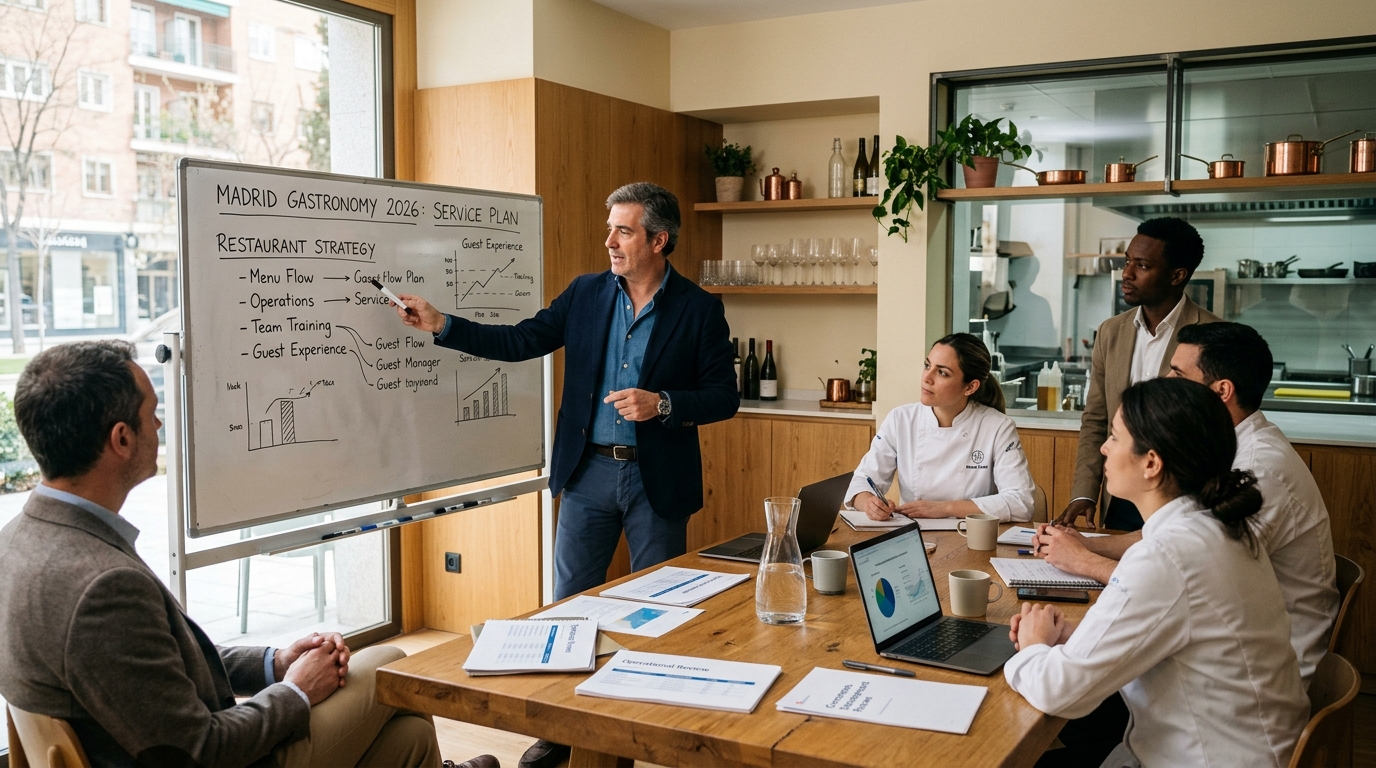
The intervention of a restaurant consultant is especially valuable in certain circumstances. Below are six specific situations that justify hiring a gastronomic consultant.
Situation 1: Opening a new restaurant
Launching a restaurant from scratch involves making dozens of critical decisions with incomplete information and tight deadlines. A gastronomic consultant brings experience from previous projects, knowledge of the local market and proven methodology to avoid costly mistakes.
The investment in gastronomic consulting during the opening phase ranges between EUR 3,000 and EUR 15,000 depending on the scope of the project, a minimal fraction compared to the total investment of a restaurant (typically between EUR 150,000 and EUR 600,000).
Situation 2: Profitability problems
When a restaurant registers losses or insufficient margins, the entrepreneur usually reacts by reducing costs indiscriminately or implementing cosmetic measures that do not address the root causes.
A restaurant consultant performs a complete diagnosis that identifies the real problems: uncontrolled food cost, excessive labor cost, inadequate prices, low table turnover or operational inefficiencies. Experience shows that most restaurants with profitability problems can be redirected with the appropriate interventions.
Situation 3: Expansion or franchising
Replicating a successful gastronomic concept requires systematizing processes, documenting knowledge and transferring know-how systematically. The gastronomic consultant accompanies in:
- Operations documentation: Operations manuals, technical data sheets, procedures
- Franchising model design: Economic conditions, franchisee support, quality control
- Location selection: Feasibility criteria for new points of sale
- Team training: Development of training structures for new openings
Situation 4: Change of concept or renovation
The evolution of the market, the wear and tear of the concept or the need for differentiation may require a profound transformation of the restaurant. A gastronomic consultant helps to:
- Diagnose the current situation: Analysis of positioning, results, customer perception
- Design the new concept: Change proposal aligned with trends and market opportunities
- Plan the transition: Work schedule, team training, communication to customers
- Manage implementation: Coordination of suppliers, supervision of execution
Situation 5: Recurring operational problems
Restaurants often face chronic operational problems that are temporarily resolved but reappear: slow table turnover, errors in orders, customer complaints, high staff turnover, excessive waste.
A gastronomic consultant addresses these problems from a systemic perspective, identifying the root causes and designing structural solutions that prevent recurrence.
Situation 6: Lack of knowledge or time of the owner
Many restaurant entrepreneurs are professionals from other industries who have invested in a restaurant out of passion or opportunity. They lack the specific technical knowledge to effectively manage all aspects of the business.
The gastronomic consultant acts as a strategic partner that complements the owner's capabilities, allowing him to focus on the areas where he brings the most value while delegating operational and technical management to the consultant.
4. Difference between a consulting agency and an independent consultant
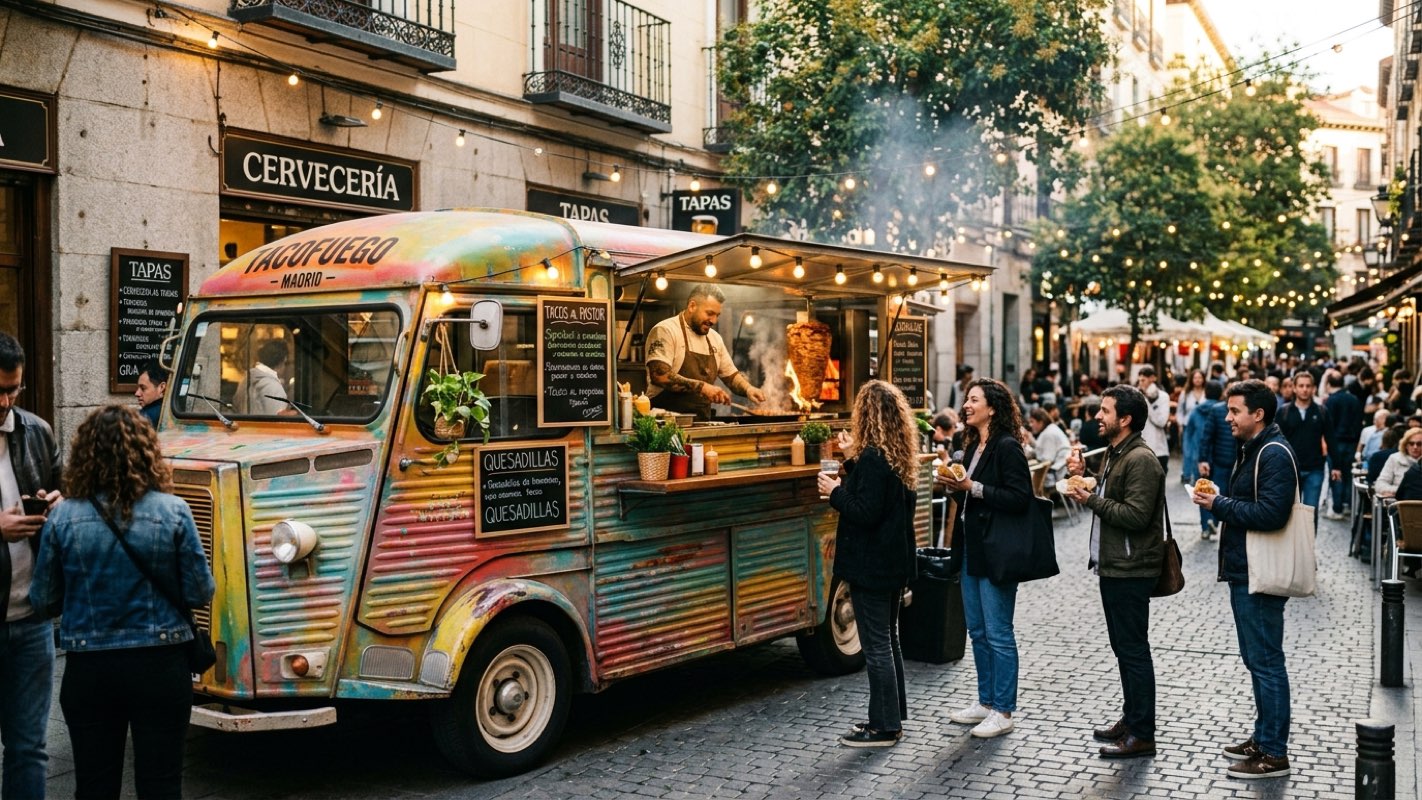
The gastronomic consulting market offers two service models: specialized agencies with multidisciplinary teams and independent consultants with a general profile. Both models have advantages and limitations that the entrepreneur must evaluate.
Consulting agency
Gastronomic consulting agencies operate with teams of various professionals specialized in different areas: finance, operations, marketing, kitchen, human resources.
Advantages:
- Access to multiple specialties without the need to hire several consultants
- Proven methodologies and standardized resources
- Ability to tackle complex projects with multiple simultaneous fronts
- Contingency coverage (illness, availability)
- Ability to scale resources according to project needs
Limitations:
- Typically higher cost (recurse fees, organizational structure)
- Possible lack of in-depth knowledge of the specific business
- Turnover of consultants assigned to the project
- Less flexibility to adapt to scope changes
Independent consultant
The independent consultant is a self-employed professional who offers gastronomic consulting services individually, frequently with extensive sector experience.
Advantages:
- Generally more competitive cost
- Greater flexibility and adaptability
- Direct experience in operational management (frequently former restaurant managers)
- Closer and more personalized relationship with the client
- Quick decisions without hierarchical layers
Limitations:
- Limited coverage of specialties (the same professional covers all areas)
- Less capacity for very extensive projects
- Risk of limited availability
- No backup structure in case of contingency
Which one to choose?
The choice between agency and independent depends on factors such as:
- Project complexity: Simple projects can benefit from the personalized approach of the independent; complex projects may require the multidisciplinary team of an agency
- Available budget: The independent usually offers more competitive prices
- Need for specialization: If the project requires in-depth expertise in a specific area, the independent specialist may be more suitable
- Long-term relationship: For continuous support, the close relationship of the independent can be more fluid
It is important to note that the professional level does not depend on the organizational model. There are agencies with junior consultants and independent consultants with decades of experience and sector recognition. The key is to evaluate the specific profile of the professional or team assigned.
5. How a gastronomic consultant works
The working process of a restaurant consultant follows a structured methodology that ensures measurable and sustainable results. Although each project has its own characteristics, the typical process comprises four phases.
Phase 1: Diagnosis
The diagnosis phase establishes the baseline on which the recommendations will be built. It involves a deep immersion in the reality of the business.
Typical activities:
- Financial information gathering: Income statements, balance sheets, bank statements, supplier invoices
- Operations analysis: Service visits, process observation, team interviews
- Menu audit: Profitability analysis, rotation, margins per dish
- Benchmarking: Comparison with industry indicators (food cost, labor cost, average ticket)
- Marketing evaluation: Digital presence, reviews, brand positioning
- Interviews with stakeholders: Owner, managers, chefs, dining room team
Deliverables:
- Diagnostic report with findings and opportunities
- Identification of quick wins (high-impact rapid improvements)
- Proposed prioritized action plan
Phase 2: Planning
With the diagnosis completed, the gastronomic consultant designs the detailed action plan that will guide the implementation.
Typical activities:
- Definition of objectives: Quantifiable goals (reduction of food cost, increase in average ticket, improvement of satisfaction)
- Design of solutions: Development of specific recommendations for each area identified
- Implementation planning: Schedule, necessary resources, dependencies
- Estimated budget: Investment required for each initiative
- Definition of KPIs: Indicators that will measure progress
Deliverables:
- Strategic plan with prioritized initiatives
- Implementation schedule
- Estimated budget
- Monitoring dashboard
Phase 3: Implementation
The implementation transforms the recommendations into concrete actions. This phase requires close monitoring to ensure effective execution.
Typical activities:
- Support in execution: The consultant actively participates in implementing the changes, not just recommending them
- Team training: Workshops, training sessions, accompaniment in service
- Change management: Communication, resistance management, team motivation
- Supplier coordination: Selection of new suppliers, negotiation of conditions
- Document design: Technical sheets, operations manuals, procedures
Deliverables:
- Updated operational documentation
- Teams trained in new procedures
- Implemented systems (software, processes, controls)
- First measurable results
Phase 4: Monitoring
The last phase ensures that the improvements are consolidated and generate sustainable results over time.
Typical activities:
- KPI monitoring: Regular monitoring of profitability, operational and satisfaction indicators
- Periodic reviews: Follow-up meetings with management to assess progress
- Adjustments and corrections: Modifications to the plan based on results and learnings
- Continuous support: Available
How a gastronomic consultant works: the typical process
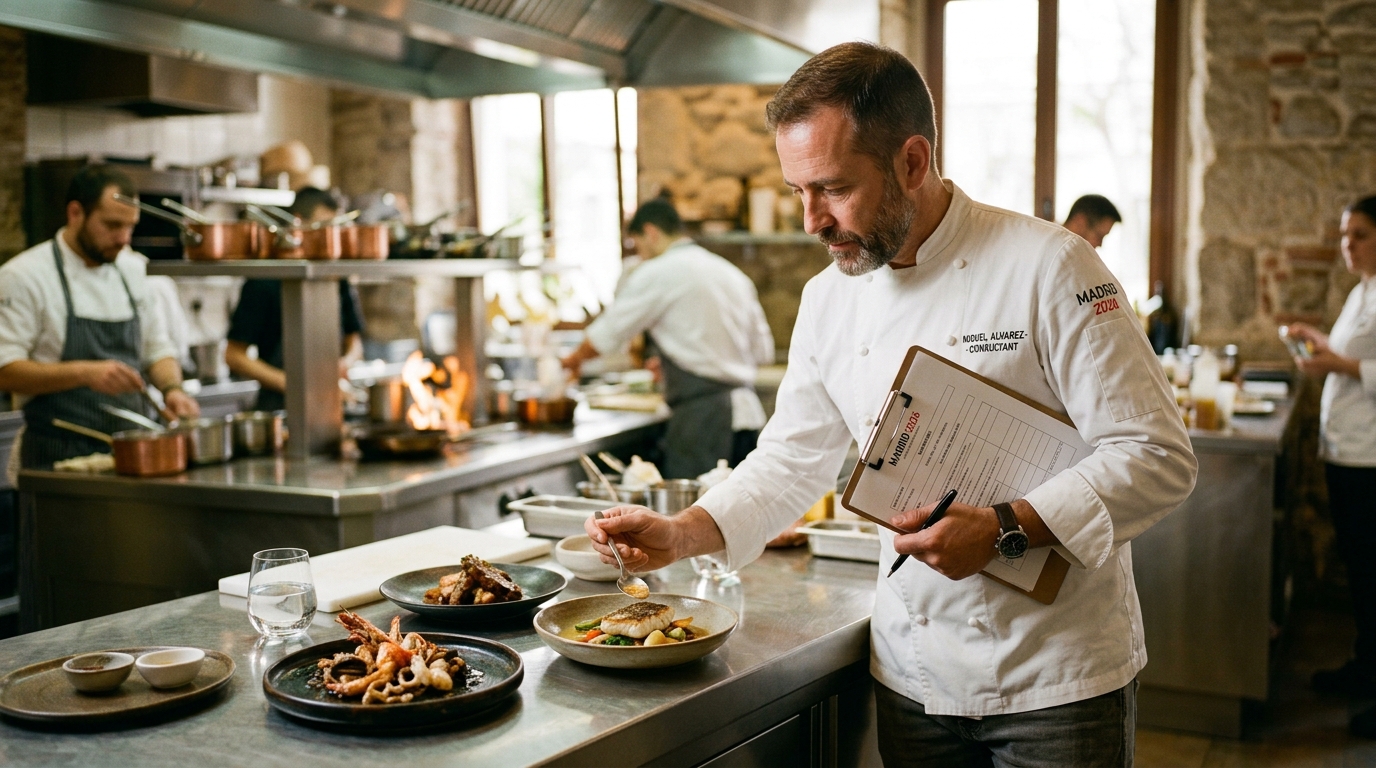
The intervention of a gastronomic consultant follows a structured methodology that allows addressing the problems of a hospitality business in a systematic way. This process, although it may vary depending on the consulting company and the specific needs of the client, is generally organized into four clearly differentiated phases.
Phase 1: Diagnosis (2-5 days)
The first contact between the restaurant advisor and the owner of the establishment consists of an exhaustive evaluation of the current situation of the business. During this phase, the consultant analyzes all the fundamental pillars: cost structure, daily operations, menu and gastronomic offer, human team, market positioning and financial situation.
The diagnosis includes on-site visits to the restaurant to observe the workflow, interviews with key personnel, review of accounting documentation and analysis of indicators such as average ticket, occupancy, table turnover and gross margin. This initial evaluation allows identifying the critical points that require immediate attention and those that offer greater potential for improvement.
Deliverables of this phase: Diagnostic report with SWOT analysis, prioritized list of detected problems and proposal of measurable objectives.
Phase 2: Action plan (1-2 weeks)
Once the diagnosis is completed, the gastronomic consultant prepares a personalized action plan that establishes the strategic lines and specific tactics to achieve the agreed objectives. This document functions as a roadmap for the transformation of the business.
The action plan defines schedules, responsible parties, necessary resources and monitoring metrics. Priorities are established based on the potential impact of each action on the profitability and viability of the project. In this phase, the required investments and the estimated budget for implementation are also determined.
Deliverables of this phase: Complete strategic plan with implementation phases, detailed budget, execution calendar and key performance indicators (KPI) that will be monitored.
Phase 3: Implementation (1-6 months)
The implementation phase is where the planned changes materialize. The level of involvement of the gastronomic consultant during this stage varies according to the agreed collaboration model: it may be a periodic remote supervision or a more active presence in the day-to-day of the establishment.
During the implementation, the restaurant advisor accompanies the restaurant team in the execution of the corrective actions: renegotiation with suppliers, redesign of the menu, optimization of production processes, staff training, implementation of control systems or execution of marketing campaigns. This phase requires flexibility to adjust the strategies according to the results that are being obtained.
Deliverables of this phase: Updated operating manuals, work protocols, training programs, implemented control systems and monthly progress reports.
Phase 4: Monitoring (monthly)
The work of a gastronomic consultant does not end with the initial implementation. Continuous monitoring is essential to ensure that the improvements are consolidated and that the business maintains its positive trajectory in the long term.
During the monitoring phase, the restaurant advisor analyzes the performance indicators monthly, reviews the evolution of the food cost, evaluates customer satisfaction and detects opportunities for additional optimization. These periodic reviews allow making adjustments before the problems become crises.
Deliverables of this phase: Monthly management reports, alerts about deviations, recommendations for continuous improvement and review meetings with management.
Find the ideal professional
Compare 219+ verified gastronomic consultants in Spain. Filter by city, specialty and type.

Sectors where a gastronomic consultant operates
The scope of a restaurant consultant covers practically all segments of the hospitality industry. Each sector presents specific characteristics that require specialized knowledge and adapted approaches.
Independent restaurants
Independent restaurants represent the segment where the work of the gastronomic consultant has the greatest transformative impact. These establishments often lack the structural resources of large chains and depend exclusively on the vision and management capacity of their owners. The restaurant consultant provides sector experience, professional management systems and differentiation strategies that allow them to compete effectively in increasingly saturated markets.
Chains and franchises
In the case of restaurant chains, the gastronomic consultant works both in the development of new concepts and in the optimization of operations of already established networks. Their intervention may focus on the standardization of processes, the training of franchisees, the design of profitable menus or the improvement of the customer experience at all points of sale.
Hotels
The restaurant department of a hotel presents specific challenges: integration with the accommodation offer, management of seasonal demand peaks, catering service for events and high expectations of an international clientele. A gastronomic consultant specialized in this sector helps to maximize the profitability of internal points of sale (restaurant, bar, room service) and to position the gastronomic offer as a differentiating element of the establishment.
Catering and banquets
The professional catering sector, including banquet and event companies, requires specific knowledge about volume production, service logistics, perishable inventory management and compliance with food safety regulations. The restaurant consultant provides experience in structuring operations that allow maintaining healthy margins in a business with high price competition.
Dark kitchens
Dark kitchens have experienced exponential growth in recent years. This business model, based exclusively on production for home delivery, presents an economic equation different from traditional restaurants. The gastronomic consultant helps to design menus optimized for delivery, manage the efficiency of multitasking production and select the most profitable distribution platforms.
Bars and cocktails
The segment of specialized bars, especially those with a proposal for artisanal cocktails, requires a particular focus on inventory management of premium beverages, training of bar staff and creation of differentiated experiences. A restaurant consultant with experience in this sector helps to design profitable beverage menus, optimize bar space and develop loyalty strategies.
Collectives
The collectives sector, which includes company canteens, hospitals, residences and educational centers, operates under strict regulations and tight margins. The gastronomic consultant provides knowledge on cost optimization, regulatory compliance and management of large volumes while maintaining quality standards.
What happens if you don't hire a consultant: common mistakes
The decision to start a business in the hospitality sector without the support of a specialized professional often leads to a series of errors that jeopardize the viability of the project. Knowing these common failures allows us to understand the real value of having an experienced restaurant advisor.
Uncontrolled food cost
One of the most frequent and devastating problems in restaurants without professional advice is the loss of control over the cost of raw materials. In the Spanish hospitality sector, the average food cost is between 28% and 35% of turnover. Without adequate control systems and without technical knowledge for its management, this percentage can easily rise above 40%, completely eroding the operating margin.
Uncontrolled food cost does not only come from misuse of products, but also from errors in recipe calculation, unquantified waste, inconsistent portions, internal theft and inefficient purchases. A gastronomic consultant implements control systems that allow monitoring this critical indicator and acting before the damage is irreversible.
Concept without differentiation
The saturation of the hospitality market means that restaurants without a clear differentiation proposal have difficulties attracting and retaining customers. Many entrepreneurs open establishments based solely on their passion for gastronomy, without conducting a market analysis that identifies their unique positioning.
The lack of differentiation manifests itself in generic menus that do not tell a story, decorations that do not convey any concept and experiences that do not generate memories. A restaurant advisor helps to define and articulate a unique value proposition that emotionally connects with the target audience.
Inadequate location
The choice of location is one of the most critical decisions and, paradoxically, one of the most frequently made without adequate analysis. A location with good pedestrian flow may be unsuitable for a certain type of cuisine, while an apparently premium area may have insurmountable competition.
The gastronomic consultant evaluates factors such as visibility, accessibility, surrounding competition, demographic profile of the environment and development potential of the area before recommending a location.
Failure rates without advice
The sector data is overwhelming: the failure rate of new restaurants in Spain reaches 60-80% when the entrepreneur lacks previous experience and professional advice. This figure contrasts dramatically with the 30-40% failure rate recorded by projects that have had the support of a gastronomic consultant during their development.
The difference lies not only in the technical knowledge, but in the ability of the restaurant advisor to anticipate problems, avoid costly errors and establish management systems that allow the business to adapt to the changing circumstances of the market.
Frequently Asked Questions
Below we answer the most common questions about the role of the gastronomic consultant and their intervention in hospitality businesses.
How much does it cost to hire a gastronomic consultant?
The fees of a restaurant consultant vary significantly depending on the type of intervention, the experience of the professional and the size of the project. One-off diagnostic services can start from EUR 1,500, while full implementation projects are usually between EUR 5,000 and EUR 20,000. Monthly monitoring usually costs from EUR 500 to EUR 1,500 per month. It is important to consider this investment as a percentage of the business: a good gastronomic consultant generates returns far greater than their cost.
How long does a consulting project last?
The duration depends on the scope of the project and the objectives set. An initial diagnosis is completed in one week, while full implementation can take from one to six months. Subsequent monitoring is maintained indefinitely or for a minimum period of twelve months to ensure the consolidation of changes. The most transformative projects, such as the opening of a new restaurant or the complete restructuring of an existing one, usually require between three and twelve months of active intervention.
Does a gastronomic consultant only work with large restaurants?
There is no minimum business size to benefit from the advice of a gastronomic consultant. In fact, small and medium-sized restaurants tend to get a greater relative impact from the intervention, as small percentage changes can represent significant improvements in absolute profitability. Many consultants offer services tailored to small establishments, including express diagnostics and specific optimisation programmes.
Can I hire a consultant for just one specific aspect?
Yes, sector consulting allows you to hire focused services according to the client's needs. The most requested areas independently include: food cost optimisation, menu redesign, team training, gastronomic marketing strategy or service improvement. This modality is especially useful when the entrepreneur is clear about the specific problem they want to solve.
What is the difference between a gastronomic consultant and a chef consultant?
Although the terms are sometimes used interchangeably, there are significant differences. The chef consultant focuses primarily on culinary aspects: recipe development, menu design, cooking techniques and kitchen staff training. The gastronomic consultant has a broader focus that includes business management, financial strategy, marketing, operations and cost structure. Both figures can complement each other in projects that require both culinary and business expertise.
How do I know if my restaurant needs a consultant?
There are several signs that indicate the need for professional advice: profit margins below 10%, food cost above 35%, declining turnover, high staff turnover, consistent negative reviews or a feeling of losing control over the business. It is also advisable to have a restaurant consultant in times of change: opening, expansion, change of concept or reputation crisis.
Does the gastronomic consultant work with suppliers?
Yes, supplier management is one of the areas where a gastronomic consultant provides immediate value. This includes renegotiating contractual terms, identifying alternative suppliers, consolidating purchases to improve prices and developing technical specifications that ensure consistent quality. Optimising raw material costs can generate savings of 5-15% on total supplier spend.
What results can I expect from consulting?
The results vary depending on the starting point and the objectives, but the most common improvement indicators include: reduction of food cost between 3 and 8 percentage points, increase of the average ticket between 10% and 25%, improvement of the gross margin between 5 and 15 points, increase of occupancy in low hours and reduction of staff turnover. The return on investment in consulting usually materialises in a period of six to eighteen months.
Explore our directory of 219+ verified gastronomic consultants in Spain to find the right professional for your project.